Health Workers Associations Lobby against Cuts to Refugee Health Care

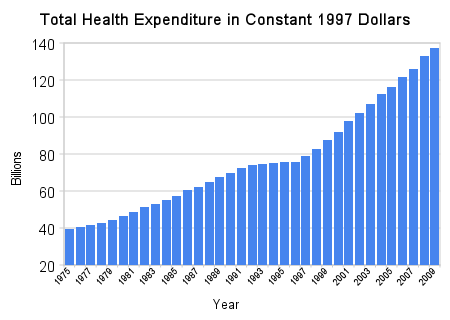
Cuts to health care for refugees are hoped to reduce the growth in health care expenditures in Canada

Health workers groups held several rallies across Canadian cities yesterday to protest government cuts to health care programs for refugees.

As part of its deficit reduction program, the federal government is cutting medical services provided at no cost to refugees through the Interim Federal Health Program, limiting free services to emergency health care and treatment of chronic conditions that pose a public health threat, like tuberculosis. The government expects the move will save it $100 million over five years.

Immigration Minister Jason Kenney has also indicated that the move was motivated by complaints that refugees receive free dental and eye care from the federal government that Canadian citizens do not.

“Canadians have been telling us they don’t think that smuggled migrants and bogus asylum claimants should be getting better health-care benefits than Canadian seniors and taxpayers. They won’t be getting extras that Canadians don’t get, like dental, eye care, and discretionary pharmaceuticals,” Kenney said in April.

Health workers associations, including the Canadian Medical Association, the Canadian Nursing Association and the Canadian Pharmacists Association, whose members stand to lose tens of millions of dollars in health care work due to the cuts, wrote an open letter to the federal government in May criticizing the cuts.

In the letter they argued that the cuts would shift the cost of treating refugees to other groups like provincial governments, result in complications and higher costs in the future due to refugees not getting early treatment for medical problems, increase the load on emergency departments, and lead to an increase in public health threats from contagious diseases like tuberculosis.

Study: Learning Canadian Culture/Customs, Not Just Language, Essential for Immigrants’ Success

New immigrants taking a computer class as part of the Language Instruction for Newcomers to Canada (LINC) program (City of Peterborough)

A study released on Thursday finds that the success of Canada’s immigrants rests not just on their English and French language skills, but also their knowledge of Canadian culture.

The study authors, Tracey Derwing and Erin Waugh, advise that the language training programs for immigrants that the federal government funds, like the Language Instruction for Newcomers (LINC) program, be refocused to place a greater emphasis on helping new Canadians acquire pragmatic skills and Canadian cultural knowledge.

The study, Language Skills and the Social Integration of Canada’s Adult Immigrants, was done for the Institute for Research on Public Policy and based its conclusions on several research findings on the language proficiency levels of immigrants, including a seven-year longitudinal study that followed two groups of immigrants, one Slavic language speakers, and the other Mandarin speakers, to observe their progress over the period.

The data from the longitudinal study shows that Mandarin speakers acquired lower levels of both official Canadian language skills and national cultural knowledge than Slavic language speakers. It found that among the Mandarin speakers, many did not know their Canadian born neighbours after seven years, and were less likely to be aware of local events than their Slavic-language speaking counterparts. This isolation from the Canadian population further limited the opportunity for Mandarin speakers to develop their language skills.

The authors believe the differences in the experiences of the two groups are due to Mandarin being more distinct from English than Slavic languages, which are in the same language family as English, and more cultural overlap existing between Slavic-language speakers and native-born Canadians, for example in a shared interest in hockey, than between Mandarin speakers and average Canadians.

The authors recommend that immigrant-focused government and other organizations expand outreaches to help immigrants network in Canada, in order to help them develop  the “soft skills” needed to integrate in the economy, and to work to raise awareness among native-born Canadians about the challenges immigrants face and strategies for interacting with them.


New Canadian EI Rules Could Affect Number of Work Permits Issued to Foreign Workers

The Harper government is planning to change the federal Employment Insurance program to encourage the long-time unemployed to take available Canadian jobs, which could reduce the demand for foreign workers in Canada’s resource and service industries.

Human Resources Minister Diane Finley announced changes to the EI program on Thursday (Human Resources and Skill Development Canada)

Canadian Immigration Minister Jason Kenney had earlier noted the anomaly of regions of Canada with high unemployment rates being forced to bring in foreigners to fill vacant jobs primarily in the resource sector due to too few Canadians being willing to do them.

The new EI rules could remedy this situation by increasing the incentive for unemployed Canadians to take up resource-sector and menial labour jobs. Minister of Human Resources, Diane Finley, in an announcement introducing the proposed changes, said the purpose of the new rules was to “connect Canadians with available jobs in their local area”.

The changes could also mean that foreign workers could see a drop in demand from Canadian firms for their labour and be less likely to be granted a Canadian work permit.

New Rules Explained

Under the new changes, EI recipients will be divided into three tiers:

  • Long-tenured workers – Canadians who have paid into EI for seven of the preceding ten years and over the preceding five years have collected EI for 35 weeks or less
  • Frequent claimants – Canadians who have had three or more claims and received benefits for more than 60 weeks in the preceding five years
  • Occasional claimants – All other claimants

Long-tenured workers will receive benefits for 18 weeks without having to expand their job search to different occupations. In this period, they will lose their EI benefits if any job that pays at least 90 percent of their previous earnings and is the same occupation as their previous job is available to them and they refuse to take it.

After 18 weeks, they would lose their benefits if there is any job that pays at least 80 percent of their previous earnings and is in a similar industry as their previous job is available to them and they refuse to take it.

Occasional claimants will receive benefits for six weeks without having to expand their job search to different occupations. In this period, they will lose their benefits if any job that pays at least 90 percent of their previous earnings and is the same occupation as their previous job is available tot hem and they refuse to take it.

After six weeks, they would lose their benefits if there is any job that pays at least 80 percent of their previous earnings and is in a similar industry as their previous job is available to them and they refuse to take it. After 18 weeks, they would lose  they would lose their benefits if there is any job in any industry that pays at least 70 percent of their previous earnings available to them and they refuse to take it.

Frequent claimants will receive benefits for six weeks without having to expand their job search to different industries. In this period, they will lose their EI benefits if any job that pays at least 80 percent of their previous earnings and is in a similar industry as their previous job is available to them and they refuse to take it.

After six weeks, they would lose their benefits if there is any job in any industry that pays at least 70 percent of their previous earnings available to them and they refuse to take it.

The new rules also require claimants to travel up to an hour to work an eligible job.

Uncertain Economic Impact

It remains to be seen how effective the coming changes will be in reforming EI to encourage Canadians on it to find jobs.

Amela Karabegovic, an economist for the Fraser Institute, believes that the changes are relatively minor tinkering and don’t fix the fundamental flaws of the current Employment Insurance model.

In an interview with CICS, Ms. Karabegovic said that the major problem with federal Employment Insurance is that the premiums employers and employees pay are a fixed percentage of income, that isn’t adjusted for risk, making it unlike any other type of insurance.

“The incentives are such that some individuals may over-use it. To give you an example, imagine having car insurance where no matter of how many claims you make, you pay the same premium. Regardless how many accidents you get in, regardless of your age, and so on.

Similarly with Employment Insurance, unless the premiums are adjusted to reflect risk, obviously some individuals are going to over-use it,” Ms. Karabegovic said.

“Instead of making marginal changes, there has to be a more fundamental change in order for the system to work properly, to do what it’s supposed to do which is to provide temporary assistance to those who unexpectedly lost their jobs”.

 

Census Data Shows Canadian Retiree Population to Rapidly Increase in Coming Years

The majority of baby boomers are on the verge of entering retirement, which puts Canada's social programs in jeopardy

Results from the 2011 census show that Canada’s population has reached its peak in terms of productivity, and that the population of retirees will explode in coming years as the main bulk of baby boomer generation reaches retirement age.

The census shows that Canada’s population has increased by 5.9 percent, to over 33.46 million, since 2006, the last time the census was taken.

With the ratio of children to adults at a record low, the number of dependants per worker is also at historic lows, but the low number of children will mean that the working age population will shrink relative to dependents as today’s workers begin retiring in greater numbers and an insufficient number of children reach working age to replace them.

Funding the Old Age Security (OAS) program and Medicare as their costs increase without a sufficient increase in tax revenue will consequently be a major problem for Canada in the coming years. Solutions proposed by commentators to the revenue shortfall include increased immigration, cuts to government spending, and creating personalized pension accounts that invest in the private sector to increase returns on social security payments.

BBC Article asks “What does it mean to be Canadian?”

An article published last Thursday in the BBC asks what it means to be Canadian, and explores the role immigration plays in it:

Canada is anything but a homogenous Commonwealth state; nearly one million indigenous people rub shoulders with immigrants from around the world, including many from Asia. What does it mean to be Canadian now? What are the traits which help make up modern-day Canada?

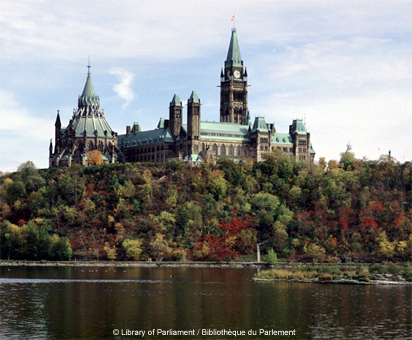
Canada's regional differences and ethnic and linguistic diversity make finding a common Canadian trait elusive. Image of Canadian Parliament (Library of Parliament / Tom Littlemore)

The piece, by Lorraine Mallinder, describes Canada’s unique identity as a heterogeneous nation, with vast regional differences and multiple large linguistic and ethnic minorities. Mallinder asks: what does a French-speaking Quebecer have in common with a West Coast Anglophone Vancouverite?

It quotes John Ralston Saul, an author of books on Canadian culture, who says “[Canadians] accept that difference is actually quite interesting. What makes it possible to live together is agreement on things like ethics and public policy. Not agreement on accents and religion”.

Mallinder describes Canada’s situation as a bilingual nation, with 200 additional languages being added to the mix due to immigration, largely from Asia. Canadians are generally tolerant toward immigration, writes Mallinder, but views have become more mixed recently, with more Canadians preferring a US-style melting pot, with a unified culture, over Canada’s more mosaic multiculturalism.

Canadians have a generally high standard of living, continues the article, with a large percentage of them connected to the internet and involved in social networking sites. Crime is low, but Canadians on the average have grown more concerned about crime, with about half supporting the Harper government’s plan to build more prisons.

The issues that are most important to Canadians now are the economy and jobs, ahead of healthcare and the environment, which has helped the Conservatives win elections on a platform promising economic growth and more jobs, writes Mallinder.

She adds that Canadians are generally generous, with the adult population having given more than two billion hours to volunteer work in 2010.

The article quotes Noah Richler, author of a book on Canadian identity, in its conclusion on what defines Canadians: “The defining trait of being a Canadian is understanding our good fortune, knowing that we’re not actually better than anybody else”.