
Canadian Government Developing a Digital Dollar

The Winnipeg Royal Canadian Mint, where the circulation coins of Canada and other countries are produced. The Mint hopes to develop a digital replacement for physical coins in the MintChip

The Royal Canadian Mint, a Crown Corporation responsible for minting Canada’s coins, is developing a digital version of the Canadian dollar that it hopes will make digital transactions as easy as cash-based ones.

The technology being developed is called MintChip, and the Mint is describing it as the ‘evolution of currency’. It relies on public-key cryptography and tamper-proof hardware to create non-reversible digital payments that do not require a connection to a third party payment processor like a bank or credit card network to complete.

The technology is not expected to be unhackable, but to keep risks for small-value digital transactions at manageable levels. The Mint says that due to the absence of transaction fees, the chips would also allow micro-transactions as low as 1 cent ($0.01).

The chip is still in the R&D phase, and it’s not known when, if ever, it will be released for public use.

To push the technology along, the Mint held a MintChip Challenge this year that invited software developers to create prototypes of applications of the technology. The competition ended in September with the winning teams being awarded a total of $52,700 worth of .9999 purity gold at a ceremony on October 25th.

While ambitious and seemingly far-fetched, it appears the Mint is quite far along in developing a replacement for physical banknotes and coins. If successful, the MintChip project would make Canada the first country in the world to have digital government-issued cash, giving its economy a leg up in the race to be a globally competitive centre of innovation.


Immigrating to Canada to Escape American Election Results

Resource hubs like northern Alberta's oil sands offer prospective immigrants numerous jobs, which can be the best first step to immigrating to Canada

When Americans look for a country to flee to in the event of their favoured candidate losing the presidential elections, they inevitably look to Canada, their (mostly) English speaking cousin to the North.

For the past three decades, it has been predominantly supporters of Democratic candidates that have made the immigration ultimatum, as Canada has been perceived to align with their party on foreign policy, income redistribution, and cultural issues.

This election season though, the warnings of immigrating to Canada have taken on a more bi-partisan quality, as Canada’s lower government debt levels, stronger economy, tighter control over illegal immigration, more reserved culture, and what many perceive as overall more functional governance, appeals to many conservative-leaning voters.

The growing appeal of Canada to American conservatives also stems from a strong personal dislike that many of them have for Obama, for reasons both ridiculous/bigoted – e.g. conspiracy theories of Obama being a secret Muslim – and ideological.

Whatever the appeal, the number of Americans who actually follow through with their threats and make the move is few. There is no statistically significant spike in immigration levels from the U.S. following presidential elections.

The length and complexity of the Canadian immigration process requires a significant investment of time and a long-term commitment that political passions typically do not motivate.

Immigration Pointers

If you are an American and, having read all of this, still intend to move to Canada, keep these points in mind:

  • Getting a job in Canada is the most practical way for Americans to become landed immigrants. Having Canadian work experience confers significant advantages for foreign nationals applying for Canadian permanent residency through several immigration programs.
  • Occupations not traditionally viewed as prestigious, like heavy duty mechanics and welding, can give you the best opportunity of getting a job offer and a work permit in Canada, which will start your process of becoming a Canadian.
  • Less populated provinces with booming resource-industries, like Alberta, have better job markets and easier paths to immigration than the immigrant magnets of Vancouver, Montreal and Toronto.

As an American, you can take comfort in the fact that you will likely have an easier time immigrating than the nationals of many other countries, as proficiency in one of Canada’s official languages (English and French), is one of the most important criteria in Citizenship and Immigration Canada’s assessment of a permanent residence application.

Canadian Immigration Department Details its Achievements, Expects Reduction in Wait Times

CIC plans to adopt an Expression of Interest (EOI) model for the Federal Skilled Worker Program similar to that in place in New Zealand.

Citizenship and Immigration Canada (CIC) summarized what it considers the successes of its reforms in recent years in a press release on Friday. CIC said that it expects that by the end of 2013, it will be able to process applications as they are received, and complete their processing within one year.

It said that this will open the door to the adoption of the Expression of Interest (EOI) model for the Federal Skilled Worker Program (FSWP) and possibly other economic immigration streams.

The EOI model requires applicants to submit a simplified preliminary application detailing their qualifications, and allowing provinces and employers to select the most promising of those applicants, who are then invited by CIC to submit a full application that includes documents proving their qualifications.

“The Government’s number one priority remains the economy and job growth. Immigration backlogs are detrimental to our ability to attract the world’s top talent,” said Citizenship and Immigration Minister Jason Kenney in describing the purpose of moving to a “just in time” EOI system of immigration admittance.

“With the decisive actions we’ve taken to tackle the backlog, we will finally be able to select immigrants who better meet the needs of the Canadian labour market. We will aim to process their applications in less than 12 months.”

CIC also detailed the measures it has taken in recent years to address a problem that has long afflicted the FSWP: the large volume of applications that exceed the program’s annual quota and lead to wait times as high as eight years:

  • In 2008, only accepting FSW applications from individuals qualified in an occupation on the “priority occupations” list.
  • In 2010, adding a quota to the number of new applications accepted.
  • In June 2012, eliminating most of the FSW applications on the backlog that were received before February 27, 2008.
  • In July 2012, temporarily pausing acceptance of new FSW applications, except for applicants with a qualifying job offer and those applying under the PhD stream.

These measures, said CIC, have reduced the FSWP backlog from 640,000 people in 2008 to 100,000 today.

CIC plans to re-start the FSWP in 2013, and admit 55,300 people over the year, approximately the same as the 55,000–57,000 quota for the program in 2012. It said that new rules for a revamped FSWP will be published later this year.

Canada to Keep Immigration Level at 250,000 in 2013

International students in Vancouver, Canada. CIC is seeking to increase the percentage of immigrants admitted under the Canadian Experience Class (CEC), which allows temporary foreign workers and international students in Canada to apply for permanent residence if they have Canadian work experience (CICS News)

Citizenship and Immigration Canada (CIC) announced today that it will keep immigration levels at 240,000-265,000 in 2013, for the seventh straight year. The maintenance of immigration numbers from previous years amidst a growing Canadian population means Canada will have a lower immigration rate as a percentage of its population, and rebuff calls by several prominent organizations to increase immigration levels to one percent of Canada’s population.

Citizenship and Immigration Minister Jason Kenney said earlier this year that Canada would hold off on increasing immigration levels until the country does a better job of bringing immigrant employment and income rates up to the Canadian average, and until public sentiment, which in some recent opinion polls weighs against increases in immigration levels, supports higher levels.

CIC said that it also intends to increase the number of new permanent residents admitted through the Canadian Experience Class (CEC) program from 6,000 in 2011 to 10,000 in 2013.

The Canadian Experience Class was created in 2008 to allow individuals residing in Canada on temporary resident visas to transition to permanent residence. Foreign temporary workers with at least two years of Canadian work experience, and foreign graduates of Canadian post-secondary institutions with at least one year of Canadian work experience are eligible to immigrate under the program, which CIC says admits the kind of immigrants that would be more likely to integrate well into the Canadian labour market.

Protectionist Workplace Regulations Marginalizing Canadian Immigrants -Vancouver Sun

A new CLSRN study finds that occupational licensing requirements are preventing many Canadian immigrants from working in their field of study

An article in Monday’s Vancouver Sun blames trade and professional associations for hampering the economic integration of Canadian immigrants.

The story, by columnist Don Cayo, cites a new report by Canadian researchers that finds that occupational licensing is preventing immigrants to Canada from working in their field of study, at a cost of $2-5.9 billion a year to the country’s economy.

The Canadian Labour Market and Skills Researcher Network (CLSRN) report notes that a full 20 percent of workers in the Canadian labour market now work in an occupation that requires a license, and that these licenses create significant barriers to entry that take up to a decade for a new immigrant to overcome.

Drawing from several studies authored by CLSRN researchers, the report finds that the average Canadian immigrant experiences an immediate drop in the skill level of their occupation upon arriving in Canada, and that even after four years, only 20 percent of women and 25 percent of men are working in their pre-immigration occupation.

Commenting on the report’s findings, Cayo says the mismatch between immigrants’ work experience and their post-immigration occupation is due to self-regulating trade and professional associations imposing licensing requirements in order to limit competition to their members:

Self-serving self-regulators are capable of a lot of sanctimonious bumph — and of greatly complicating accreditation procedures — to minimize the competition and protect their comfortable sinecures. Simply put, the old boys are way too prone to put down the “new kids on the block.”

He argues that unless self-regulating labour associations reduce regulatory barriers to entry in their fields, the government should repeal their regulatory powers.

Occupational licensing and the immigrant income gap

The income gap between recent immigrants and native-born Canadians has grown from 20 percent in 1970 to 40 percent in 2011, despite the proportion of recent immigrants with a university degree increasing from 10 percent in 1980 to over 54 percent in 2007 – or more than double that of native-born Canadians.

One possible explanation is the shift to an immigration selection criteria that favours foreign professionals who are trained for occupations that are regulated in Canada, like teachers, nurses, doctors, lawyers, engineers and veterinarians.

Census Shows Growing Multi-Lingual-ism of Canada, in Line With Immigration Trends

Granville St in Vancouver. Thirty-one percent of Vancouver's population now speaks a language other than English or French at home, according to the latest census data (CICS News)

Twenty percent of the Canadian population now speaks a language other than French or English at home, according to the latest census information released by Statistics Canada.

The statistics point to immigration’s transformational effect on Canadian demography and culture, as hundreds of thousands of people from primarily non-English and French speaking countries settle in Canada each year.

The census shows a majority – 58.0% – of the Canadian population speaking only English at home, and 18.2% speaking only French.

According to the census, the fastest growing non-English-or-French languages in Canada between 2006 and 2011 were:

  • Tagalog, the national language of the Philippines (+64%)
  • Mandarin, the official language of China (+50%)
  • Arabic, spoken in the Middle East and North Africa (+47%)
  • Hindi, the official language of India (+44%)
  • Creole languages, spoken primarily in the Caribbean islands (+42%)
  • Bengali, a common language in India (+40%)
  • Persian, the official language of Iran (+33%)
  • Spanish, the official language of Spain and most of Latin America (+32%)

The list closely mirrors immigration trends, with the Philippines, India and China as the largest sources of immigrants to Canada:

  • Philippines (13%)
  • India (10.8%)
  • People’s Republic of China (10.8%)
  • United Kingdom (3.4%)
  • United States of America (3.3%)
  • France (2.5%)
  • Iran (2.4%)
  • United Arab Emirates (2.4%)
  • Morocco (2.1%)
  • Republic of Korea (2%)

Citizenship and Immigration Canada (CIC)

Among metropolitan areas, the highest concentration of non-English and French language speakers was found in Toronto, with 32.2% speaking another language at home. The most commonly spoken immigrant languages in Toronto were found to be Cantonese, Punjabi, Chinese n.o.s., Urdu and Tamil.

Vancouver had the next highest concentration of immigrant language speakers, at 31%. Among immigrant language speakers, Punjabi was the most common language spoken, at 17.7%, followed by Cantonese (16.0%), Chinese n.o.s. (12.2%), Mandarin (11.8%) and Tagalog (6.7%).

Montréal had a significantly lower proportion of immigrant language speakers than Toronto and Vancouver, at 16.5% of its population.

Arabic, at 17.2%, followed by Spanish (15.2%), Italian (8.1%), Chinese n.o.s. (5.7%) and a Creole language (5.4%) were the most common immigrant languages reported to be spoken in the city.

Canadian Non-Partisan Think Tank Finds Oil Sands Greatly Benefit Country’s Economy

A technician at Syncrude, the largest producer of crude oil derived from the Athabasca oil sands (Syncrude Canada Ltd.)

The Conference Board of Canada (CBoC), the largest non-partisan think tank in Canada, has published a study today showing that development of northern Alberta’s Athabasca oil sands will create over 3.2 million person-years of employment in Canada over the next 25 years, a third of them in provinces other than Alberta.

The CBoC report projects $364 billion in investment will be made into developing Canada’s oil sands deposits over the next 25 years, which will create 880,000 person-years of employment in projects directly related to oil sands development and 1.45 million in production of goods/services linked to the investment through the supply-chain.

The combined 2.3 million person-years of employment are projected by the study to earn $172 billion in income, which will generate another 880,000 person-years of employment through the wealth effect of the employees spending their income.

The report estimates that over 90 percent of the direct-effects employment, 70 percent of the supply chain employment, and 59 percent of the wealth effect employment will be generated in Alberta, where the investment activity will occur.

Other Canadian regions will benefit in the order of Ontario, deriving the largest benefit, then BC, Quebec, the Prairies, and Atlantic Canada, which will see the smallest gain in oil-sands-investment-related employment.

The CBoC report only studied the projected effects of the oil sands investment, and not the oil production itself, which it estimates will be even larger than the investment activity.

The report projects Canadian oil exports will increase by 2.9 million barrels of oil per day (mmbd), from 2011 levels, to 4 mmbd of oil by 2035, increasing direct employment in the oil and gas industry to 175,000.

Continued immigration into Alberta

The employment effects predicted by the CBoC study suggest that high-levels of inter-provincial and international immigration into Alberta will continue for the forseeable future.

Alberta led Canadian provinces last year with a population growth rate of 2.5 percent, thanks to having the highest per capita GDP and, alongside Saskatchewan, the lowest unemployment rate in Canada.

Canada Ranks 17th in ‘Ease of Doing Business’, Shines in ‘Starting a Business’ Category

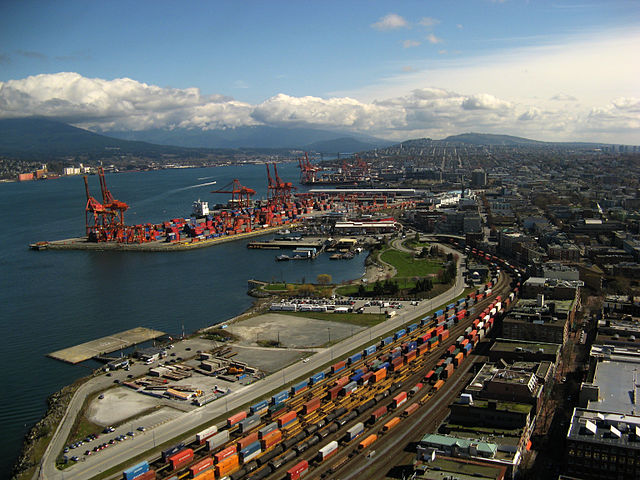
Canada's largest port, the Port of Vancouver. Canada placed 17th in the World Bank's Doing Business report that ranks countries by general ease of doing business.

Canada ranks as the 17th easiest place in the world to do business in a report released on Tuesday by the World Bank. The 2013 edition of the Doing Business report rates 185 countries according to 11 sets of indicators that quantify the ease of complying with regulations and the protection of property ownership rights.

Canada’s overall ranking was weighed down by the low scores it received in the ‘Dealing with construction permits’ (69), ‘Getting electricity’ (152), and ‘Enforcing contracts’ (62) categories. It ranked near the top of the rankings in the ‘Starting a business’ category, at third, with a business requiring one procedure and five days to start on average in the country.

Last month, Canada placed fifth in another international economic freedom index, the Fraser Institute’s annual Economic Freedom of the World report. In that ranking, Canada placed well ahead of its southern neighbour, which came in 18th.

The situation is reversed in the World Bank report, with the US, at 4th in the world, ranking 13 places ahead of Canada -exactly the same number of places that Canada was ahead of the US by in September’s report.

Relevance

The accuracy of economic freedom indices has been questioned by some groups, due to the arbitrary weighting of the indicators used to formulate the final score a country receives, and the non-recognition of the ease of participating in the un-regulated, informal economy – an area where less developed countries have an advantage due to their less developed regulatory enforcement mechanisms – as a factor in economic freedom in all of the major indices.

Nevertheless, a good showing in an economic freedom index is highly sought after due to the perception it gives of a country being open for business and having a strong rule of law.

Canada’s placing in the indices should improve considerably in coming years due to the comprehensive Red Tape Reduction Action Plan, a major overhaul of the regulatory framework, announced this month, which will implement the recommendations of the federal government’s year-long Red Tape Reduction Commission.

Russian Bride Ditches Canadian Pensioner, Collects $25K in Welfare On His Dime

BC resident Heinz Munz is being ordered to pay nearly 25 thousand dollars after his Russian bride left him and began collecting social assistance (Jeff Belmonte)

An elderly Russian woman left her Canadian husband and subsequently collected nearly $25,000 in social assistance payments that have been charged to the 82 year pensioner who sponsored her immigration to Canada, said the Canadian man affected.

In an interview with the CBC, BC resident Heinz Munz said he had no idea that his Russian ex-wife, Polina Telyuk, was receiving social assistance until he received the $24,899.34 bill from the BC provincial government:

“When she applied for assistance, they should have told me. They never did.”

Under Canadian immigration law, a Canadian permanent resident or citizen can sponsor their foreign spouse for Canadian permanent residence, but is financially responsible for any financial assistance their spouse receives from the government for three years from the date they become a permanent resident.

Munz said in the interview that he began paying the bill for Telyuk’s social assistance payments because he feared his home could be seized by the government if he didn’t.

He said he did not suspect there was any thing amiss until his Russian wife, who he had met on the internet, left him, as she was “so nice” to him up to that point. Munz said that the day after Telyuk received her permanent resident papers, she left in a taxi with her daughter, laughing and chatting in Russian.

Possible reforms

Munz complained to the RCMP and Citizenship and Immigration Canada (CIC), but nothing came of it. Allegations of marriage fraud typically do not end in charges being laid, as it is usually difficult to prove the sponsored party broke any law by planning to marry their partner to immigrate to Canada and then leave them.

Experts for years have cited examples like Munz’ to make the case for toughening immigration sponsorship rules. Citizenship and Immigration Minister Jason Kenney said that new rules would soon be put in place requiring sponsored spouses to live with their Canadian spouses for two years to be eligible for permanent residency.

This is similar to a rule in place in the US, which gives a two year ‘conditional resident status’ to sponsored spouses, after which they can apply for permanent residency if they have met all of the eligibility conditions.

CBC Obtains Federal Police Report on Hungarian Refugee Claimants

A scan of the front page of the CBSA's report, obtained by CBC News

The largest news broadcaster in Canada, CBC News, has obtained a draft of a Canada Border Services Agency (CBSA) report on Hungarian refugee claimants, a group which has grown significantly since Canada lifted visa requirements for Hungarian nationals in 2008.

The report describes the findings of Project SARA, a CBSA intelligence study of Hungarian refugee claimants, which include high levels of welfare fraud and petty crime in the community, and indications of a sophisticated operation centred in Hungary that is assisting and coordinating the movement of the claimants.

The draft report says most refugee claimants from Hungary are Romani, an ethnic minority in Europe sometimes referred to as gypsies -though this term is considered derogatory by many Roma organizations. It says that in large part, they seek protection based on claims of being persecuted as an ethnic minority in their country.

According to the report, Canada has grounds to reject Hungarian refugee claimants, as Hungary is a European Union member-state, and as such, its nationals are free to move to any other EU state if they face danger in a particular EU country.

The report concludes that while reinstituting visa requirements for Hungarian nationals would reduce the number of claimants from the country, it is not a long-term solution as those seeking to file claims in Canada can do so from other European countries. It proposes instead a faster claims process for refugee claimants from European Union member-states.

The proposal is similar to a power already granted to the Department of Citizenship and Immigration with the passing of Bill C-31, the Protecting Canada’s Immigration System Act, in late June, which gives the department the discretion to create a list of ‘safe’ countries with democratic governments and reputations for respecting human rights, and process asylum claims by individuals from these countries in 45 days instead of the usual 1,000 days.

The bill also denies claimants from countries on the list a right to appeal their decision, which is often used by asylum seekers to delay their deportation for years.