Canadians Now Wealthier Than Americans, Mostly Due to Housing Prices

Condo construction in Canada. The crash in the US housing market was the main cause of the average net worth of households in Canada surpassing the net worth of households in the US (Raysonho)

A report that first surfaced on Canada Day stating that Canada now has higher average household net worth than the US set the news media on both sides of the border buzzing. Advocates of robust government intervention in the economy pointed to this development as vindication of their faith in their economic ideology, while Republicans blamed the news on Obama’s term in office.

The real cause of the switch in household net worth standings is much more mundane: a drop in housing prices in the US. As the National Post’s Andrew Coyne notes, home prices declined by nearly one-third in the US from 2006, when the US was ahead in household net worth, to 2011, when the wealth comparison used in the report was done, while they remained steady in Canada, and this accounts for almost all of the drop in the average household net worth in the US relative to that in Canada. A commodity boom driving up the value of the Canadian dollar also helped Canada’s relative position.

The key policy decision in the US that caused the divergence in the wealth of American and Canadian households was the goal the American political establishment set in the early 2000s to purposefully encourage a boom in the housing market using the government sponsored enterprises (GSEs), Fannie Mae and Freddie Mac, and low interest rates from the Federal Reserve as the tools.

As far back as 2001, popular American pundit Paul Krugman, in classic Keynesian economic fashion, trumpeted the benefits a housing bubble could provide for the US economy and proposed the means of creating it:

To fight this recession the Fed needs more than a snapback; it needs soaring household spending to offset moribund business investment. And to do that, as Paul McCulley of Pimco put it, Alan Greenspan needs to create a housing bubble to replace the Nasdaq bubble.

The Federal Reserve obliged and sharply lowered interest rates and kept them there for the next three years.

The GSEs did their part and expanded their volume of purchases of privately issued mortgage backed securities from $20 billion in 2000 to over $150 billion at the height of the housing bubble, in 2006.

In contrast, the Canada Mortgage and Housing Corporation (CMHC), a crown corporation which has a role somewhat similar to that of the GSEs in the US, remained conservative in the type of mortgages it insured, while the Bank of Canada kept its overnight lending rate a full two percentage points higher than the Fed’s, and consequently, no bubble formed in Canada’s housing market.

Whether the US economy would have been spared a housing bubble in the absence of the expansion of GSE subsidies and lowering of the Fed’s lending rate is a matter of much scholarly debate. At the very least, the decision by the American political establishment and Federal Reserve authorities to expand government mortgage subsidies and keep interest rates low for three years, respectively, did nothing to prevent a bubble from forming, and made the one that did form worse than it otherwise would have been.

The real story that emerges in Canada overtaking the US in average household net worth is the superiority of a more prudent approach to economic intervention that emphasizes sustainable economic development over one that focuses on boosting GDP in the short term at any price.


Financial Post Addresses Growing Income Disparity Between Recent Immigrants and Other Canadians

1880 poster inviting people to immigrate to Canada. The income gap between recent immigrants and native born Canadians has grown from 20 percent in 1970 to 39 percent today.

The growing income gap between recent immigrants and longer-established Canadians received special news coverage today with a report in the Financial Post by the deputy chief economist of CIBC, Benjamin Tal.

The article describes the deteriorating position of newly arrived immigrants relative to native-born Canadians by comparing what it was in the 1970s to what it is today:

A male immigrant who arrived in Canada in the 1970s made about 80¢ on the dollar relative to a Canadian-born worker, and he was able to narrow the gap at a rate of roughly 1¢ per year. Today, despite the fact two-thirds of newcomers have post-secondary education, their earnings have dropped to close to 60¢ on the dollar and the gap is narrowing at a much slower pace. Nearly half of the individuals who immigrated to Canada between 2001 and 2006 are overqualified for the jobs they occupy.

Tal places a large economic price on the growing income gap, estimating it deprives Canada of $20 billion in earnings a year, and argues that the Canadian economy will need to do better at harnessing the economic potential of its immigrants if it is to make up for the decreasing ratio of Canadian workers to retirees as Canada’s population ages.

The editorial counsels against expanding immigration programs designed to meet Canada’s short term labour market needs by allowing lower skilled workers to become permanent residents, arguing that lower-skilled workers are less able to adapt to changing labour market conditions. It points out that even in the comparatively long-term-focused Federal Skilled Worker Program, one third of the preferred occupations are construction-industry related, and that a slowdown in the housing market could leave immigrants in these vocations lacking the qualifications to work in Canada.

Tal recommends that to address the income gap, the Canadian government should borrow from Australian immigration policy, which manages to keep income disparity between its immigrant and native-born workers at 50 percent the level seen in Canada, and raise language proficiency requirements for immigration.

This is not the first time an economist for a large Canadian bank has recommended increasing the language bar for immigrants. A report by TD chief economist Craig Alexander in February proposed increasing official language proficiency requirements for immigration applicants along with expanding the role of provincial nominee programs in selecting immigrants in order to reduce the income and employment gap between immigrants and native-born Canadians.

Immigration’s Crime-Reducing Effect Gets Media Attention

Chinatown in Toronto. A growing visible minority proportion has coincided with a decline in the crime rate in Toronto. (chensiyuan)

Study findings suggesting that immigration reduces crime have been picked up today by the online version of MacLean’s magazine, one of Canada’s largest weekly news magazines, in an article, Does immigration reduce crime?

One study referenced, conducted by researchers Ronit Dinovitzer and Ron Levi at the University of Toronto, compared the rate of youth delinquency in a group of 900 teenagers, 66 percent of whom were non-European immigrants, in a Toronto community in 1999, to the rate found in a group of 835 teenagers in the same community, but twenty three years earlier, when only 10 percent of respondents came from an immigrant background.

The findings show a significantly lower rate of youth delinquency, which includes activities like smoking marijuana, getting into fights and stealing cars, in the newer cohort of teenagers over the older, less ethnically diverse cohort.

Another finding by Statistics Canada shows a strong negative correlation between the rate of violent crime in Montréal neighbourhoods, and the proportion of the neighborhood’s population that is made up of recent immigrants.

The more general correlation that advocates of the ‘immigration reducing crime’ theory point to is the nation-wide decline in the crime rate since the 1970s, when immigration levels were significantly increased by the Trudeau government and maintained by governments since. Major Canadian cities like Toronto have seen their crime rates decline by up to 50 percent since 1991, as their proportion of foreign born residents, now at 50 percent in Toronto, has increased.

TD Bank Says it is Looking to Reverse Closure of Some Iranian-Canadians’ Accounts

TD Bank is looking to smooth over relations with the Iranian-Canadian community after it closed dozens of Iranian-Canadians' bank accounts. (Matthew G. Bisanz)

After a maelstrom of criticism for closing the bank accounts of dozens of Canadians of Iranian descent, in some cases with little to no explanation, TD Bank announced this week that it is looking to address the complaints and handle its enforcement of financial sanctions against Iran more delicately.

In an interview on Monday, a spokesman for TD Bank, Mohammed Nakhooda, said the bank realizes that the closure of the accounts had been “distressing and disruptive” and that it was looking to improve the way it communicates with its customers about the issue.

The Canadian financial institution said it would try to reach out to those affected and explain the cause of their account closure, and put in place a process whereby it would obtain more information from some affected clients to clarify their personal status and activities, and depending on the information obtained, re-open their accounts.

Letters sent up until recently, seen by media, from TD to customers to inform them of their account closing contained only a statement that the sanctions prohibit the bank from “providing any financial services to, or for the benefit of Iran, or any one in Iran” in the way of an explanation.

Half a Million Visitor Visas Issued so far in 2012

10 percent more visitor visas have been issued so far this year than this time last year. The "Honeymoon Capital of the World", Niagara Falls, is Canada's top tourist spot (Ujjwal Kumar)

Citizenship and Immigration Canada (CIC) announced last week that it has issued 500,000 temporary visitor visas in 2012, a 10 percent increase from the number issued this time last year.

The total number of people who visit Canada far exceeds the number of temporary visas issued, as ninety percent of international visitors to Canada are from one of the over 50 countries whose citizens do not need a visa to visit Canada, including the US which is the source of 76 percent of foreign visits to Canada.

Not surprisingly, the Canadian province that attracts the most foreign visitors every year is the country’s largest and most populous, Ontario. British Columbia and Quebec are the second and third most visited provinces, respectively.

Niagara Falls, Ontario remains far and away the most popular tourist destination in Canada, with an estimated 12 million people visiting it each year.

Iranian-Canadians Outraged as at least 100 Accounts Closed by TD Bank

View of Tehran, Iran at night. Being a party to a financial transaction to or from family in Iran was enough to get the accounts of some TD Bank customers closed. (Babak Farrokh)

After a report last week by the Ottawa Citizen detailing the case of several Iranian-Canadians who had their bank accounts closed by TD Bank with little to no explanation, it has emerged that the scale of the closures is much larger than the initial report indicated.

At least one hundred Canadians of Iranian descent have come forward in the last week reporting that they have had their accounts closed by TD, in an attempt by the financial institution to enforce economic sanctions against Iran put in place by the Harper government last year.

The Canadian government has had targeted sanctions on individuals tied the Iranian government since 2007, but new broad-based sanctions, enacted in November 2011 under the Special Economic Sanctions Act (SEPA), created a prohibition against any financial transaction by a Canadian resident or institution with any account at a financial institution in Iran, subject to a few exceptions, including personal remittances of values less than forty thousand dollars.

It has been left to each Canadian financial institution to interpret and decide how to comply with the new sanctions, and TD Bank has stated in letters to customers whose accounts it has closed that it believes the sanctions prohibit it from “providing any financial services to, or for the benefit of Iran, or any one in Iran”.

Many in the Iranian-Canadian community are furious about the closures. One affected TD customer, Pooya Sadeghi, created a Facebook page, Condemn TD Bank in their Treatment of clients with Iranian Background, after TD closed an account he shared with his wife and her parents.

On the Facebook page, a commenter, Nilofar Shidmehr, expressed her fear that Canadians of Iranian descent could be targeted by ethnic laws like those that affected Japanese-Canadians during World War 2:

We should do everything to stop this asap. Imagine what happens if there will be a war and the Canadian government sends us to an internment, like they sent Japanese-Canadians to. Is anyone knows some human rights organization which can help? I think this case can be considered as human rights abuse.

There was also blame put on the Harper government for the sanctions. “TD Bank is small potatoes. The real problem is Harper and his thugs in government who are behind all this,” commented Poyan Nahrvar.

In an interview with CICS News, Kaveh Shahrooz, a lawyer and vice-president of the Iranian Canadian Congress, and a harsh critic of the Iranian government, denounced the sanctions’ indiscriminate effect. “The Iranian government is a brutal regime that has killed many people in Iran, and to the extent that sanctions can prevent their agents from operating, we have no problem with that, but they need to differentiate between ordinary Iranians and regime agents.”

In regards to TD’s closure of customer accounts, Mr. Shahrooz said: “we believe [the sanctions] are being over-zealously applied.” The ICC is set to meet TD executives in about 10 days, at which point Mr. Shahrooz says they hope that TD will agree to put in place a process whereby the people affected can be told why their accounts were closed.

Study: Learning Canadian Culture/Customs, Not Just Language, Essential for Immigrants’ Success

New immigrants taking a computer class as part of the Language Instruction for Newcomers to Canada (LINC) program (City of Peterborough)

A study released on Thursday finds that the success of Canada’s immigrants rests not just on their English and French language skills, but also their knowledge of Canadian culture.

The study authors, Tracey Derwing and Erin Waugh, advise that the language training programs for immigrants that the federal government funds, like the Language Instruction for Newcomers (LINC) program, be refocused to place a greater emphasis on helping new Canadians acquire pragmatic skills and Canadian cultural knowledge.

The study, Language Skills and the Social Integration of Canada’s Adult Immigrants, was done for the Institute for Research on Public Policy and based its conclusions on several research findings on the language proficiency levels of immigrants, including a seven-year longitudinal study that followed two groups of immigrants, one Slavic language speakers, and the other Mandarin speakers, to observe their progress over the period.

The data from the longitudinal study shows that Mandarin speakers acquired lower levels of both official Canadian language skills and national cultural knowledge than Slavic language speakers. It found that among the Mandarin speakers, many did not know their Canadian born neighbours after seven years, and were less likely to be aware of local events than their Slavic-language speaking counterparts. This isolation from the Canadian population further limited the opportunity for Mandarin speakers to develop their language skills.

The authors believe the differences in the experiences of the two groups are due to Mandarin being more distinct from English than Slavic languages, which are in the same language family as English, and more cultural overlap existing between Slavic-language speakers and native-born Canadians, for example in a shared interest in hockey, than between Mandarin speakers and average Canadians.

The authors recommend that immigrant-focused government and other organizations expand outreaches to help immigrants network in Canada, in order to help them develop  the “soft skills” needed to integrate in the economy, and to work to raise awareness among native-born Canadians about the challenges immigrants face and strategies for interacting with them.


Census Data Shows Canadian Retiree Population to Rapidly Increase in Coming Years

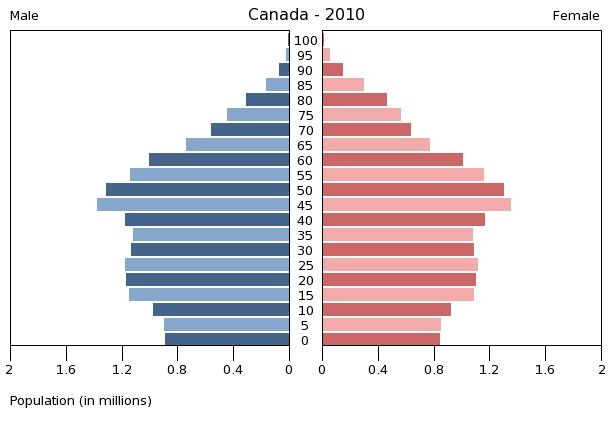
The majority of baby boomers are on the verge of entering retirement, which puts Canada's social programs in jeopardy

Results from the 2011 census show that Canada’s population has reached its peak in terms of productivity, and that the population of retirees will explode in coming years as the main bulk of baby boomer generation reaches retirement age.

The census shows that Canada’s population has increased by 5.9 percent, to over 33.46 million, since 2006, the last time the census was taken.

With the ratio of children to adults at a record low, the number of dependants per worker is also at historic lows, but the low number of children will mean that the working age population will shrink relative to dependents as today’s workers begin retiring in greater numbers and an insufficient number of children reach working age to replace them.

Funding the Old Age Security (OAS) program and Medicare as their costs increase without a sufficient increase in tax revenue will consequently be a major problem for Canada in the coming years. Solutions proposed by commentators to the revenue shortfall include increased immigration, cuts to government spending, and creating personalized pension accounts that invest in the private sector to increase returns on social security payments.

Visible Minority Population of Canada Increasing

A Toronto Star story reports that the visible minority population in Canada is growing, and at a rate faster than the general population:

StatsCan projects that the visible minority population in this country will continue to be bolstered by sustained immigration and slightly higher fertility rates in the next 15 years or so.

By 2031, Canada could be home to 14.4 million people belonging to a visible minority group, more than double the 5.3 million reported in 2006. The rest of the population, in contrast, is projected to increase by less than 12 per cent during that period, the federal statistical agency projects.

Immigration has drastically changed Canada's major cities. Nearly 20 percent of the Greater Vancouver Region's population is of Chinese origin. (City of Vancouver)

The StatsCan projections predict that by 2031, South Asians will make up the largest visible minority ethnic group in Canada, with a population of 4.1 million, and the Chinese population will be the second largest, at 3.5 million.

Immigration has transformed Canada’s major cities in recent decades. Chinese immigration has increased the percentage of the Vancouver metropolitan area’s population that is of Chinese origin to nearly 20 percent.

In Canada’s largest city, Toronto, visible minorities now make up nearly 47 percent of the total population, and nearly 50 percent of the city’s residents are foreign born.

BBC Article asks “What does it mean to be Canadian?”

An article published last Thursday in the BBC asks what it means to be Canadian, and explores the role immigration plays in it:

Canada is anything but a homogenous Commonwealth state; nearly one million indigenous people rub shoulders with immigrants from around the world, including many from Asia. What does it mean to be Canadian now? What are the traits which help make up modern-day Canada?

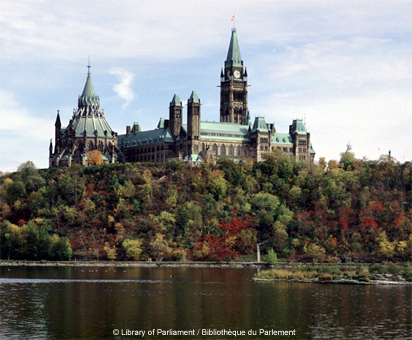
Canada's regional differences and ethnic and linguistic diversity make finding a common Canadian trait elusive. Image of Canadian Parliament (Library of Parliament / Tom Littlemore)

The piece, by Lorraine Mallinder, describes Canada’s unique identity as a heterogeneous nation, with vast regional differences and multiple large linguistic and ethnic minorities. Mallinder asks: what does a French-speaking Quebecer have in common with a West Coast Anglophone Vancouverite?

It quotes John Ralston Saul, an author of books on Canadian culture, who says “[Canadians] accept that difference is actually quite interesting. What makes it possible to live together is agreement on things like ethics and public policy. Not agreement on accents and religion”.

Mallinder describes Canada’s situation as a bilingual nation, with 200 additional languages being added to the mix due to immigration, largely from Asia. Canadians are generally tolerant toward immigration, writes Mallinder, but views have become more mixed recently, with more Canadians preferring a US-style melting pot, with a unified culture, over Canada’s more mosaic multiculturalism.

Canadians have a generally high standard of living, continues the article, with a large percentage of them connected to the internet and involved in social networking sites. Crime is low, but Canadians on the average have grown more concerned about crime, with about half supporting the Harper government’s plan to build more prisons.

The issues that are most important to Canadians now are the economy and jobs, ahead of healthcare and the environment, which has helped the Conservatives win elections on a platform promising economic growth and more jobs, writes Mallinder.

She adds that Canadians are generally generous, with the adult population having given more than two billion hours to volunteer work in 2010.

The article quotes Noah Richler, author of a book on Canadian identity, in its conclusion on what defines Canadians: “The defining trait of being a Canadian is understanding our good fortune, knowing that we’re not actually better than anybody else”.