Do Muslim Immigrants Really Threaten the West?

VANCOUVER, BC, Oct. 14, 2012 – There has been no shortage of books about Muslims since September 11, 2001. Many of them have warned that recent waves of immigration have already turned countries such as France and Britain into “Eurabia.”

Eva Sajoo

Eva Sajoo - Guest Columnist for CICS News and Research Associate with the Centre for the Comparative Study of Muslim Societies and Cultures at Simon Fraser University in Vancouver - Follow Eva on Twitter @esajoo

On this side of the Atlantic, such migration is said to represent “medieval authoritarianism that has no place in the democratic American environment.” Others have alleged that the migrants’ religion directs them “to treat Christians as servants and permits (them) to violate Christian women.”

The first quote is from Paul Blanshard on Catholic immigrants in 1949, and the second from German August Rohling on Jewish ones in the late 19th century.

In his concise new book, The Myth of the Muslim Tide, journalist Doug Saunders of the Globe and Mail addresses the prevailing fear about visibly Muslim immigrants. The author of the award winning book Arrival City, Saunders has studied migration and marginalised populations before. He puts the influx of Muslim immigration in the context of previous waves of newcomers.

What is striking is how unoriginal most of the anti-Muslim writing is. Every large and visibly different group of migrants has been given much the same reception. Take, for example, the comment of Canadian commissioner for overseas immigration, Laval Fortier. He wrote that the Italian “is not the type we are looking for in Canada. His standard of living, his way of life, even his civilisation seems so different that I doubt if he could even become an asset to our country.” Most Canadians today would be astonished by this claim, but in the wake of World War II Italians were seen as lazy, prone to crime and authoritarianism, and Catholic.

Catholics, like Jews and Eastern Europeans generally, were seen as outside the boundaries of “our civilisation”, feared as disloyal, and a potentially undermining influence. This attitude was satirised by Canadian poet Earle Birney in his “Anglosaxon Street”, where he writes “Here is a ghetto gotten for goyim/ O with care denuded of nigger and kike”.

The successful integration of Catholic Europeans, Jews, and more recently South Asians, all of whom formerly huddled in ethnic neighborhoods under a cloud of suspicion, is ignored by our current alarmists. Authors like Mark Steyn, Niall Ferguson, Pamela Gellar, and Bat Ye’or warn that western civilisation is about to be submerged by a tide of Muslims seeking to Islamise us all.

Saunders systematically deals with each claim, providing clear documentation and hard data. Will a fast growing Muslim population soon be a majority in Europe? According to a comprehensive Pew Study, they will comprise a maximum of 8 per cent of the population by 2030. Temporarily higher birth rates among new immigrants swiftly fall to match those of the mainstream population.

Are Muslims in the west alienated and angry? Quite the contrary. In fact, they routinely score higher than mainstream populations on surveys measuring national pride and identification. Fully 83 per cent of British Muslims are proud to be citizens, compared to 79 per cent of non-Muslims. Approval of democratic institutions in France is at 69 per cent among Muslims, and 58 per cent generally.

A dominant fear is that Muslim arrivals are inevitably linked to the risk of terrorism. In fact, across Europe in 2010 there were 249 terrorist attacks – three of them linked to Islamic ideology. The rest were carried out by separatists, anarchists, and others, none of them Muslim.

Despite the fact that these and many other claims about Muslim immigrants are unsupported by facts, Islamophobia has infiltrated politics on both sides of the Atlantic. A member of Arkansas’ House of Representatives, John Fuqua, was recently heard to remark that “I see no solution to the Muslim problem short of expelling all followers of the religion.” The prevailing suspicion has also allowed a frightening erosion of legal protections for civil liberties, so that Muslim men like Adnan Latif have died in their cells after years of imprisonment without charge in Guantanamo Bay.

Meanwhile, in 2012 alone, mosques have been vandalised in Gatineau, Winnipeg, and Charlottetown, and veiled Muslim women attacked in Kingston, Ontario and New Glasgow, Nova Scotia. This is a disturbing but unsurprising result of the belief that Muslims are a threat because of their religion.

The Myth of the Muslim Tide is a tightly documented demolition of the hysterical anti-Muslim polemics that have become so common. Doug Saunders reminds us of the forgotten history we seemed determined to repeat.

Eva Sajoo is a Research Associate with the Centre for the Comparative Study of Muslim Societies and Cultures at Simon Fraser University in Vancouver. She has a graduate degree in International Development and Education from the University of London. Her published academic writing focuses on the rights of women and minorities. She has contributed widely to publications on Islam and the Muslim world. Eva has taught at the University of British Columbia, and the Beijing University of Science and Technology. She currently teaches at SFU.

Release of Convicted Fraudster Highlights Serious Problems with Canada’s Refugee System

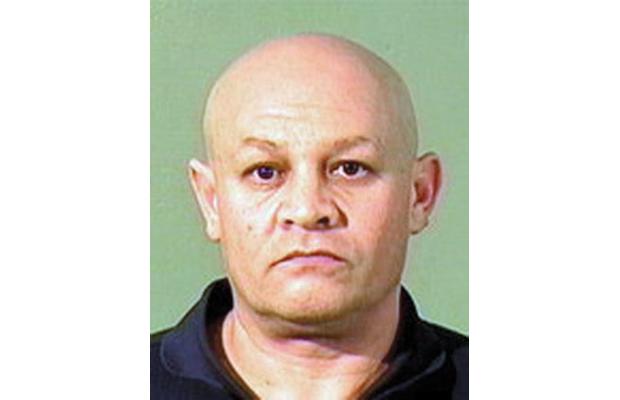
A photo of Gyula Kolompar released by the Coquitlam RCMP in a March 2012 news release seeking help from the public in locating him

According to a CBC report, the Immigration Division (ID) of the Immigration and Refugee Board (IRB) released Gyula Kolompar, a refugee facing deportation, from federal custody on Tuesday, despite his conviction last week on six counts of fraud, 12 counts of fraud over $5000, and one count of mail theft, for his role in a mail theft and bank fraud operation that netted him, his wife, his son, and allegedly his brother, $345,000 in stolen funds.

His wife and son were found guilty last week as well, while his brother is still in custody.

Canada Border Services Agency (CBSA) hearing officer Kevin Boothroyd argued that Kolompar should be held in custody until his admissibility hearing, scheduled for November 7th, as he fled BC for Ontario when the police issued a warrant for his arrest for the fraud operation and is unlikely to show up for next month’s hearing.

Kolompar’s lawyer countered that his client went on public assistance in Ontario, and that this shows that he made no effort to hide from authorities, and that he was not aware of the outstanding warrant for his arrest.

ID member Leeann King agreed with the defense, saying the federal government failed to show that Kolompar is likely to not appear at next month’s hearing. She told Kolompar, “I have no evidence of you being aware of warrants and trying to flee.”

According to evidence presented in the fraud case against Kolompar, the mail theft operation involved 30 Hungarian nationals coming to Canada as refugee claimants, opening bank accounts, giving their bank cards to Kolompar family members, and then returning to Hungary.

Gyula Kolompar, his wife Katalin Kolompar and his son, Gyula Kolompar Jr., then deposited 267 stolen cheques into the 30 accounts over a course of three years, defrauding four banks of approximately $345,000.

Seeking Deportation

The federal government is seeking to deport Kolompar from Canada for his involvement in an organized crime group. He has a long record of criminality in the country, which started soon after his arrival in Canada as a refugee claimant in 2000.

He was accepted as a refugee in 2004, but lost his bid for permanent residence in 2009 due to a 2005 conviction of being in possession of stolen property.

The sophistication and scale of the Kolompar family criminal operation, involving over 30 foreign nationals all entering Canada through the refugee claim system, shows the inadequacies of the refugee program in preventing abuse by disingenuous claimants, quickly filing deportation orders for criminals, and effectively enforcing those orders.

A Canada Border Services Agency (CBSA) director testified to the Federal Standing Committee on Public Safety and National Security in February that 80 percent of the approximately 44,000 outstanding warrants in Canada are for individuals who got into the country through a refugee claim and are evading deportation orders after having their claim rejected.

Correction and Clarification Oct. 12, 2012

An earlier version of the story incorrectly referred to Kevin Boothroyd as a Citizenship and Immigration Canada officer rather than a Canada Border Services Agency hearing officer. It also did not specify that the detention review was conducted by the Immigration Division of the Immigration and Refugee Board, stating only that it was done by the Immigration and Refugee Board.

Immigration Canada to Double Working Holiday Visa Quota for Ireland

Canadian Citizenship and Immigration Minister Jason Kenney and Irish Minister for Foreign Affairs Eamon Gilmore announcing the expansion of the Canada-Ireland International Experience Canada (IEC) program (Citizenship and Immigration Canada)

Citizenship and Immigration Canada announced yesterday that the working holiday visa quota for Irish youth will be nearly doubled, to 10,000 spaces by the beginning of 2014.

Yesterday’s announcement, made during Citizenship and Immigration Minister Jason Kenney’s visit to Dublin, Ireland, comes just two days after news emerged that the length of working holiday visas for British citizens would be extended to two years from the current one.

Mr. Kenney is in Ireland to promote Canada as a destination for Irish talent, many of whom are seeking foreign employment opportunities in the midst of their country’s economic problems.

He is scheduled to visit Dublin’s Working Abroad Expo recruitment fair this weekend, where over 70 delegations from Australia, New Zealand Canada, and the Middle East are holding exhibitions to promote job opportunities for Irish people in their respective companies and countries.

Canada has a reciprocal working holiday agreement with Ireland which allows Canadian and Irish citizens to temporarily live in each other’s countries for a ‘working holiday’, during which they are permitted to work to fund their stay.

The Canadian working holiday visa is referred to as an International Experience Canada (IEC) work permit, and is available to Irish passport holders aged 18-35.

Currently, Irish youth can apply twice for the IEC work permit for 12 months each time. Kenney announced yesterday that at the beginning of 2013, Irish youth will be eligible to apply just once, but will be able to stay two years.

The change is intended to eliminate the inconvenience of Irish citizens who are working in Canada under the IEC program, being required to return to Ireland before the expiration of their first IEC work permit in order to apply for a second one.

Canadian Government Considering Electronic Bracelets For Refugee Claimants

CBSA and RCMP officers in Vancouver, Canada. The Standing Committee on Public Safety was told by a CBSA director that 80 percent of the 44,000 outstanding arrest warrants in Canada are for individuals who have had their refugee claim rejected and are evading deportation (2010 Legal Observers)

The federal government is considering requiring asylum seekers who are in Canada and awaiting a decision by the Immigration and Refugee Board (IRB) on their refugee claim to wear electronic tracking bracelets as a condition of being released from detention.

On Tuesday, parliament was presented with the findings of a study conducted by the Standing Committee on Public Safety and National Security to determine the effectiveness, cost efficiency, and feasibility of electronic supervision in the correctional and immigration setting.

The study recommended further consideration of the extra security measure for asylum seekers in part due to testimony it received from a senior official at the Canada Border Services Agency (CBSA).

The Director General of the CBSA’s Post-Border Programs, Peter Hill, noted that a staggering 80 percent of the approximately 44,000 outstanding arrest warrants in Canada are for asylum seekers who had their refugee claim rejected and did not appear at their deportation hearing to comply with their removal order.

Hill testified that he believed electronic monitoring would be effective in improving enforcement of removal orders based on positive results the CBSA has had in the limited number of cases where it has used it, and proposed more analysis be done as a preliminary step to broader application of the supervision tool.

The Committee on Public Safety was persuaded by the testimony of Hill and other witnesses and recommended in its report that the CBSA review the cost-effectiveness of electronic monitoring.

Canada Most Tax Competitive For Corporations Among Developed Countries

The KPMG Competitive Alternatives report rates Canada as the most tax competitive developed country in a survey of 14 major economies

Canada’s corporate taxes are the second lowest overall, and lowest of any developed country, among 14 large economies included in a KPMG survey of international tax competitiveness.

At the other end of the scale, Italy and France had the least competitive corporate tax rates in the survey, while the US was in the middle of the pack, at eighth most competitive.

Four of the five developing countries included in the survey: India, China, Mexico and Russia, ranked in the top of five in tax competitiveness, at first, second, fourth and fifth, respectively. Brazil was the only developing country with a tax competitive rating in the bottom half, ranking eleventh.

The survey only looked at corporate taxes and did not factor in taxes paid by individuals directly like the personal income tax and sales tax.

KPMG’s Canadian managing tax partner, Elio Luongo, lauded Canada’s standing in the survey in an interview with the Globe and Mail: “This helps our attractiveness around the world and helps us compete .. We need this to compensate for other costs.”

Recent Immigrant Feared for His Life After Call From Crooked Immigration Official

Former CIC official Barriero plead guilty to three counts of breach of public trust on July 3rd for asking immigration applicants for bribes. He was sentenced to 44 months in prison on September 20th.

An article in The Star recounts the experience of an applicant for permanent residence in Canada who was called by an immigration official who was recently convicted of breach of public trust.

George Gonsalves Barriero, who worked for Citizenship and Immigration Canada (CIC) for a total of 12 years, was promoted to a senior position with the authority to approve applications or refer them for further risk assessments in 2005, and that is when a court found that he began asking permanent resident applicants in the hispanic community for bribes.

Sidnei Ramalho, who had applied for permanent residence on humanitarian and compassionate grounds, told The Star that he feared for his life when he received a call from the immigration official in charge of his case, Barriero, who told him he would come by Ramalho’s home to pick up the money Ramalho needed to pay to get a “good letter” from him: “I don’t know him, I don’t know what he’s capable of .. I was really afraid he could send some guy here to kill me.”

Mr. Ramalho told his immigration consultant about the incident who advised him to not communicate with Barriero and let the RCMP investigate. The altercation with Barriero has left him living in fear:

Since the ordeal, Ramalho has installed cameras in his apartment, extra locks on his door — which he keeps a steel bar behind — and doesn’t answer calls from phone numbers he doesn’t recognize.

Mr. Barriero was sentenced on September 20th to 44 months in prison on three counts of breach of public trust.

Economist Tells Business Forum That Canada Faces Labour Shortage

Speakers at the 2012 Global Business Forum, held at the Fairmont Banff Springs Hotel, included the US ambassador to Canada David Jacobson and Boom, Bust and Echo author David Foot (Hedwig Storch)

In a talk that could nudge policy makers toward increasing immigration levels, Toronto economist and demographer David Foot told an audience of business executives, academics, diplomats and government leaders that Canada will face a severe labour shortage over the next two decades as millions of Canadians enter retirement.

“Canada will have more old than young people and no amount of immigration can change the figure,” said Foot.

Foot is the author of Boom, Bust & Echo, a book that forecasts changes to Canada’s economy and way of life as the population ages.

At the talk, he counselled that Canada invite more international students to settle in the country, and suggested Mexico, which has the youngest population in North America, as a good place to “recruit”.

Focusing Canadian immigration on international students has been a recurring recommendation over the last year, which makes a change in immigration law that makes it easier for foreign students to become permanent residents more likely.

Foot was one of 25 speakers who gave speeches at today’s Global Business Forum in Banff, Alberta, an event hosted annually by the iconic Fairmont Banff Springs Hotel.

Italy to Represent Canadian Government in Iran

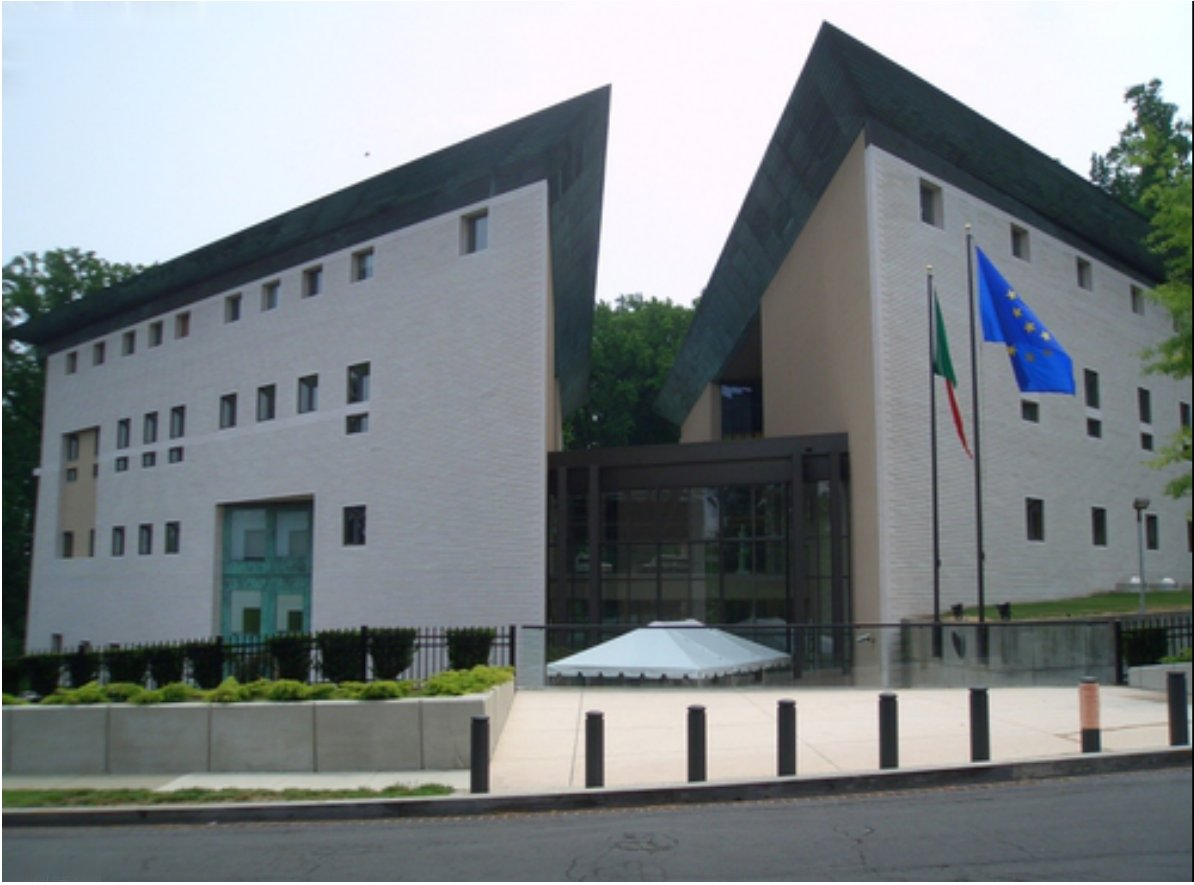
Italian embassy in Tehran, Iran. Italy has announced that it will represent Canada's interests in Iran following the closure of the Canadian embassy in the country. (Google Maps)

Italy announced this week that it will represent the Canadian government in Iran following the departure of Canadian diplomats from the Middle Eastern country. The Harper government announced on September 7th that it had closed the Canadian embassy in Tehran and ordered the Iranian embassy in Canada closed and Iranian diplomats to leave Canada within five days.

Canadian Foreign Minister John Baird, known to be a strong ally of Israel’s hard-line Likud government, said that diplomatic relations with Iran were being cut because “[Iran] routinely threatens the existence of Israel and engages in racist anti-Semitic rhetoric and incitement to genocide”.

Many in the Canadian diplomatic community, including three former Canadian ambassadors to Iran, have criticized the decision however. Kenneth Taylor, who was Canadian ambassador to Iran from 1977 to 1980 and famously helped American diplomats escape Iran during the hostage crisis, said about the move: “I really can’t see the rationale of this move … It’s a very bold stroke to sever diplomatic relations and close the embassy within five days.”

Former Canadian ambassador to Iran from 1972 to 1977, James George, said in an interview with the Globe and Mail that having a Canadian embassy in Iran was important “in defending our citizens who are on death row in Iran, and not have to go through another embassy that has other priorities.”

Mr. George, who is 93, said the move makes a Middle East war more likely: “[the embassy closure] fuels speculation about a possible attack, adds to the tension and the likelihood that something will happen. I think it was the wrong move for that reason.”

John Mundy, who was Canada’s ambassador to Iran until 2007, also weighed in with strong words about the decision:

“This is the first time in decades that a Canadian prime minister, Liberal or Conservative, appears to be advocating approaches that reduce diplomatic opportunities for peace during an international crisis”

Despite the criticism, the move has been received positively by the majority of the Canadian public, with 72 percent of Canadians in a recent Angus Reid survey saying they supported cutting diplomatic ties with Iran.

Canada Ranks 5th in World Ranking of Economic Freedom, US Falls to 18th

Canada is now ranked as having the freest economy in North America, thirteen places ahead of the United States, the historic symbol of economic freedom in the world (NASA/GSFC)

Canada tied Australia for fifth freest economy in the world in the Fraser Institute’s annual Economic Freedom of the World report, released yesterday. Canada improved its position by one spot while the US saw its ranking drop by ten spots from last year’s index.

The Fraser Institute’s economic freedom index scores countries’ degree of economic freedom by five criteria:

  1. Size of Government- a measure of how much government spends as a percentage of GDP, how much of the economy is directed by government-managed firms rather than the private sector, and income and payroll tax rates.
  2. Legal System and Property Rights- the extent to which private property ownership rights are protected and contracts are enforced by an independent judiciary and impartial court system.
  3. Sound Money- how well a country’s central bank maintains a low and stable inflation rate, and the freedom of people in a country to user alternative currencies and foreign bank accounts.
  4. Freedom to Trade Internationally- the degree of freedom people in a country enjoy from international trade barriers set up by their governments.
  5. Regulation- the extent of freedom from government restrictions on mutually voluntary activities. Countries with fewer regulations like minimum wage restrictions, dismissal regulations, and mandatory acceptance of collective bargaining requests score higher in this area.

The economic data used in the index is from 2010, as that is the most recent comprehensive data available, and comes from external sources like the International Monetary Fund, World Bank, and the World Economic Forum.

For the sixteenth year in a row, Hong Kong and Singapore ranked first and second place in the index. The two East Asian economies have the lowest levels of government spending in the industrialized world, at approximately half that of Canada as a percentage of GDP, and the fewest restrictions on trade, labour and business activities of any of the 144 countries and territories included in the index.

Like most industrialized countries, Canada received a low score in the Size of Government component, ranking 73rd in the world, due to high levels of government spending and high marginal tax rates, but ranked near the top of the index in the areas of Legal System and Property Rights (12th), and Regulation (6th), thanks to a strong rule of law providing secure rights to property, and few regulatory barriers in credit markets and on labour and business activities.

The US’s overall ranking suffered due to an increase in government spending, and a reduction in its scores in the areas of Rule of Law and Freedom to Trade Internationally.

Immigration Canada Indicates Growing Importance of Canadian Experience Class to Canadian Immigration

Immigration Minister Jason Kenney appears with Gaurav Gore, the 20,000th permanent resident admitted under the Canadian Experience Class (CEC), in a news conference on September 14th. CIC wants temporary foreign workers and graduates of Canadian post-secondary institutions like Mr. Gore to make up a greater proportion of Canadian immigrants. (Citizenship and Immigration Canada)

Citizenship and Immigration Canada (CEC) announced on Friday that the 20,000th permanent resident under the Canadian Experience Class (CEC) program has recently been admitted. The announcement signals CIC’s intent to make the CEC a bigger part of Canadian immigration, in an effort to improve the long-term labour market integration of the typical Canadian immigrant.

Immigration Minister Jason Kenney was joined by a Mr. Gaurav Gore, the 20,000th CEC permanent resident, at a news conference celebrating the program’s milestone. Mr. Kenney held Mr. Gore, a native of India who recently earned a master’s in business administration from the University of Toronto, and currently works at BMO Financial Group, as an exemplary immigrant of the type that the Department of Citizenship and Immigration wants to attract through the CEC program.

The CEC program allows temporary residents, either foreign graduates of Canadian post-secondary institutions or temporary foreign workers, to apply for Canadian permanent residence if they meet the program’s educational and work experience requirements.

CIC has said that programs like the CEC attract immigrants who are more likely to succeed because they require applicants to have Canadian work experience to qualify, which is a strong predictor of economic success in Canada.

Immigration authorities also prefer the CEC to more traditional immigration programs like the Federal Skilled Worker Program because individuals who apply under the post-graduate stream of the CEC have Canadian educational credentials, which provide more employability than many foreign credentials.

Immigration Minister Jason Kenney noted this perceived advantage of post-graduate CEC applicants, saying “international student graduates have educational credentials that are recognized by Canadian employers as well as official language skills that are important factors for success.”